Featured Interview
Axwell on Swedish House Mafia, Sweet Disposition, and Axtone
Axwell talks reforming Swedish House Mafia, the Grammy nominated Sweet Disposition remix, and scouting new talent for his Axtone label.
Transcript
Bobby: Today we're here with Axwell. What's up, brother?
Axwell: Everything is up, I hope.
Bobby: Yeah, we are up right now, we are up big time, except you on your car ride in, that's the only thing that was down.
Axwell: That was a bit of a trick, from Orlando to here. I think it was a broken van, but it was interesting.
Bobby: You made it here in one piece, man, you're the precious cargo, that's all that matters. So the car did its job, honestly, in the end. By the way, welcome to West Palm here. We belong here. You said it's your first time here, right?
Axwell: It is, yeah. I've always wanted to come here to see it, because whenever I'm in Florida it tends to be Miami most of the time, but I know there's much more to it. I'm seeing this place now for the first time.
Bobby: It's crazy, it's beautiful up here. I live in Miami, like I told you earlier, I don't come up here enough either.
Axwell: We should, we should.
Bobby: Yeah, well listen, man, dude, big fan of your music, by the way. You lowkey, you don't know this, but you kind of raised me in my music taste. So I appreciate you and everything you do. It's really dope to be sitting here with you right now. I have so many questions for you, one of them being, what were your musical inspirations before you got into music, that really made the impact to shape Axwell?
Musical Roots and Discovering Dance Music
Axwell: I think in general it was just music. When I was growing up it was like Bob Marley, the general disco era, because I was born in the '70s.
Bobby: Lucky.
Axwell: Which sounds a long time ago, but that's the era of disco, so it was a lot of good music around then. I grew up on that, and I always resonated with rhythms and drums and stuff. So I started to play drums when I was young, but I lived in the countryside, so there weren't really any people to create a band with. It was just me with my drums, which felt kind of lonely. Then I started to discover computers, and there was this music program, so you could make music on computers. I was like, okay, this is really exciting. So I think musical influences moving forward after that were electronic music mainly, techno and trance, and then it moved into sort of the French wave in the '90s, the Daft Punk wave. Daft Punk, Bob Sinclar, all the French sound, even American house like Armand Van Helden.
Bobby: Mhm.
Axwell: Armand Van Helden, You Don't Know Me, that's one of my favorites.
Bobby: Above that tune.
Axwell: Yeah, I remember hearing that on the radio, and I was like, this is new, this is something else. It's a groovy song, it was crazy, I'd never heard something like that. So that, I would say, is my background.
Bobby: Wow, that's crazy, that's wild. Armand Van Helden, legend. I mean, Daft Punk, legend, Bob Sinclar, legend, World Hold On, it's crazy, dude. A lot of the kids now know the Fisher edit instead of the original, and I feel like the original doesn't get enough love anymore.
Axwell: But even before that, he made one of my favorite songs of all time, called I Feel for You, which samples a disco thing, and it's super amazing. So I'd say, for me, Bob Sinclar before World Hold On.
Bobby: Wow, yeah, that makes sense, that was the first song I discovered.
Axwell: But Fisher made a good remix of it, really good, I think that reignited Bob's career a little bit.
Bobby: Yeah, no, it's definitely amazing. Speaking of evolution, even from remaking songs like that throughout your career, you've seen the progression and growth of dance music as a culture, within the music festivals, the production of shows, just how much it's grown in general. What do you think were the pivotal points that have made dance music so big today, that you've seen in your career?
Dance Music Coming Back Around
Axwell: I think, you know, when it started to become big again in the US is when we started out, I think 2009, the EDM boom.
Bobby: Yeah.
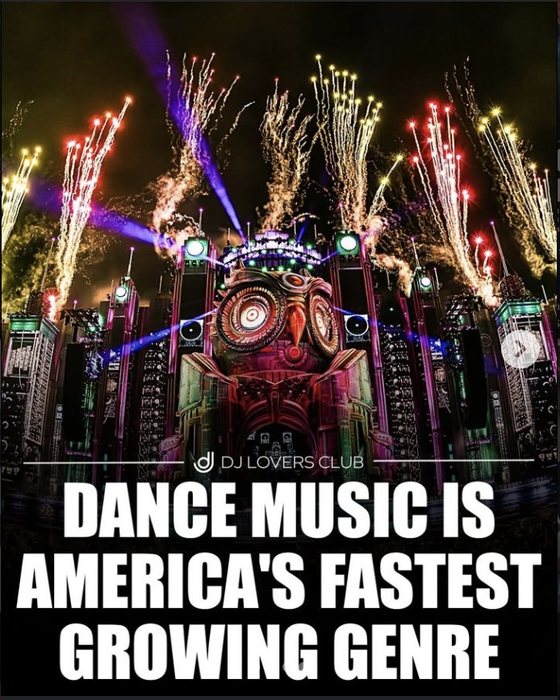
Axwell: When we came over here the first time, I was like, oh my god, it's really, we didn't expect that, it was really going off here in a big way. And I think that set laid a foundation for dance music here. Then obviously maybe it faded away a little bit after a few years, people get tired of stuff and they move on, and dance music took a little bit of a breather in the mainstream. Then now, again, it's back in an even bigger way. I've read many times that it's the fastest growing music genre.
Bobby: It is, according to Spotify statistics.
Axwell: So that's just amazing to be a part of. Everything goes in circles, and the circles go faster and faster, so you have to be fast to enjoy it.
Bobby: Absolutely.
Axwell: But yeah, right now I feel like we're in an amazing position, here in America and the rest of the world also, with dance music. I think maybe dance music is easy to relate to, because a lot of people can do it. You can have your next door neighbor become huge by just sitting with his computer and making music, and he can be this amazing persona that people can relate to.
Bobby: Yeah, no, absolutely, where you can make it in the back of a janky van, you know.
Axwell: Yes, exactly.
Bobby: Yo, so I actually have a question, because you just said your first show in America was in 2009, what was the first city you played in America?
Axwell: Well, that was Miami, because obviously Winter Music Conference, that was always a dream, to be able to go there. It was magic back in the day, everybody was playing their new songs on vinyl, so you couldn't possibly have heard it before, and you went there, to the National Hotel, to hear it for the first time.
Bobby: Wow, this is legendary.
Axwell: It was like Junior Jack was playing Thrill Me for the first time there, and it was magic days. Miami was always the melting pot of where music started, house music started. The year cycle, it was in March, everybody was there with the new records, and those records would then last the whole year.
Bobby: Yeah, wow, that's crazy. And you're mentioning vinyls right now, those are barely existent anymore.
Axwell: Yeah, I know what it is. I think I know what those are.
Bobby: Now it's all technology and USBs and CDJs, so it's so wild that it was such a different time. Honestly, when you were up there DJing back then, it seems like it was so much more work, you'd sift through vinyls and then actually put them on.
Axwell: It was terrible, because you also had to travel with a lot of those vinyls.
Bobby: Oh my god, even think about that.
Axwell: It's heavy, and also if you checked it in and lost it, you were
Bobby: You were
Axwell: Yeah, that happened to me many times. I came to the destination and I was like, okay, my vinyl is not here. So then you'd have to go out in the city and scramble, and try to buy some vinyls, or borrow from people, and you hadn't even heard those vinyls, so you'd just try them out at the club in real time, trying to salvage the situation.
Bobby: So you've had this experience of losing vinyls and having to salvage it, incredible.
Axwell: The amount of sweat, and just shaking, putting the needle on, hoping that record was good or not.
Bobby: Oh my god, stressing me out thinking about it.
Axwell: It's like a nightmare, like when you have those dreams where you're walking around in school with no pants.
Bobby: Yeah.
Axwell: Or you pee in your pants.
Bobby: Yeah.
Axwell: That's the kind of situation.
Sweet Disposition and Coming Back as Swedish House Mafia
Bobby: Oh man, that's wild. Yo, so in 2011 you got nominated for a Grammy with your Sweet Disposition remix.
Axwell: Yeah, right.
Bobby: Great track, by the way, one of the first dance music tracks I ever heard, actually. Should have won, I'm just saying.
Axwell: Yeah, I agree, it should have won. Whoever was voting on that, you voted wrong.
Bobby: All right, but then now John Summit did another remix of Sweet Disposition, what was this, two years ago now?
Axwell: Could be.
Bobby: So what do you think about your track from then, and then it being remade again by someone like John Summit, who's also on the rise?
Axwell: No, I think it's natural, it's just a natural evolution. It's an amazing song to start with, so it needs a remake every now and then. I feel like it's the same, if we take the example of Show Me Love by Robin S, which was way back when, a Swedish producer, Stonebridge, made a remix, then Steve Angello and Laidback Luke made a remix that we play a lot, and then
Bobby: Then there was another one in 2014 or '15, that was pretty big too.
Axwell: Yeah, so it's just always going to be, it's just amazing how it's being rediscovered and remade and put out again.
Bobby: Yeah, it just makes you think, like a lot of music from previous times was so good that you can remake it now and it's still a hit.
Axwell: That's amazing, that good music stays good music.
Bobby: Absolutely. So you have your label Axtone, right, and you're always looking at talent, looking to bring artists in. I was just curious, who are some really dope artists right now that you think are on the rise, or up and coming, that you'd take some interest in, or think are killing it?
Axwell: Well, right now I've taken a little bit of a focus inward, to just work on my own stuff for a bit, because I didn't release a lot of music as Axwell on my label, there was a lot of focus on Swedish House Mafia. So right now I'm focusing on putting out my own music, to sort of grab the attention of those new talents that could be interested, because obviously those guys want to release on a label that's doing good. That's how it started for me with Axtone, I started to put out my own music, and that would attract interesting artists. So that's the goal now for me, to find whatever artist, doesn't have to be a famous artist, just the one track that excites me.
Bobby: Absolutely, do you think there are any really cool artists right now on the rise, or upandcomers?
Axwell: Yeah, for sure, actually on the way I was listening to a new group.
Bobby: Hot Lava.
Axwell: Yeah, they make really nice music. I have a lot of names on my Spotify, who else is there, let me look.
Bobby: Yeah, let's go into Axwell's Spotify.
Axwell: Let me see, maybe they're not on the rise, maybe they're on the decline. I don't know, or maybe they've already peaked and I'm just late. But I like this guy called Long Story Short.
Bobby: Long Story Short.
Axwell: Yeah, he's really good, he makes good stuff. What else do we have, there's so many though. Daniel Vas is a guy.
Bobby: Nice.
Axwell: There's also Mamba. There's so many people, sometimes I've never heard of them, but I hear one track and I'm like, this is amazing, out of nowhere for me.
Bobby: That's what's up.
Axwell: It's a lot of people.
Bobby: Yeah, no, there's a lot of great talent out there right now, especially now, there's so many dope artists. So I do want to ask you this, back in 2018, when you guys got Swedish House Mafia back together, what was your influence to want to get back together with the group and restart it up?
Axwell: Well, I think we just missed Swedish House Mafia. Me and Seb were doing Axwell Ingrosso stuff, and that was amazing and everything, but sometimes you just miss something. And a lot of people online were still going on about what about Swedish House Mafia, and we thought that was going to die down, people are going to get over it.
Bobby: No, they did not.
Axwell: No, they didn't. We were like, you know what, we owe it to these people, maybe, to regroup and do it again. So it was sort of because of them.
Bobby: Wow, because of the fans.
Axwell: Yeah, because of that. They weren't dying down, they really wanted this. And then we just met up and started thinking about it, and there was this Ultra situation, Adam was like, maybe it's a cool thing for you to come back at Ultra unannounced. He was like, oh, that's exciting, unannounced is interesting.
Bobby: Very.
Axwell: So the thing was super exciting, and we were just like, [...] it, let's go.
Bobby: That's awesome, man. So what is that like also, when you were heavily involved with Swedish House Mafia, because there are three of you guys, and you each have your own creative space and sound, and the way you make things, and then going off and making your own music as Axwell, what's that like, doing a collaborative effort with the group, and then making Axwell music?
Axwell: I think, you know, it can be so nice to combine both, because obviously when you work together, you have the power of three, you can bounce ideas, and you all together steer a record in the right direction. When you're by yourself, you can fool around a bit more, and go to the left a lot, and just try other things. But it's kind of similar, I like the same music when I'm by myself as when I'm with Swedish House Mafia, it's quite similar, it just takes longer for me by myself.
Bobby: Yeah, I mean that makes sense, there's only one of you.
Axwell: Yeah.
Bobby: Nice, man. Yo, so this one might be a hard answer for you, but I'm going to ask the question anyway, what would you say are your top five releases you've ever put out?
Axwell: So I think I would have to say Don't You Worry Child. I would have to say Moth to a Flame.
Bobby: Nice.
Axwell: I would have to say More Than You Know.
Bobby: Great track.
Axwell: Red Light. And also my remix of In My Mind, I have to also give Temper Trap an honorable mention, to be honest.
Bobby: All right, honorary mention, honorary mention. Well, listen, Axwell, I don't want to keep you long, you've got to go on stage pretty soon, so I really appreciate your time, by the way, you're a legend, man, I appreciate you and everything you do, pleasure, much love, brother.
Axwell: All right.
Bobby: All right, peace.