Featured Interview
Oliver Heldens on Gecko, Dutch Rave History, and Building HI-LO
Oliver Heldens walks through how Gecko landed Becky Hill on vocals, why he split off the HI-LO alias, and the Dutch rave scene that shaped him.
Transcript
Bobby: What's going on, Oliver Heldens?
Oliver: Yeah, dude. Been good. We're here live in Palm Beach. We performed, and we've been here since yesterday. Had a really great time.
Bobby: Dude, you crushed your set, by the way. I was in the crowd vibing. It was a good time. This is your second time in West Palm, you said, right?
Oliver: Well, actually my first time officially, because I've only done like a private boat party before, for a crypto conference event. Which was also fun, definitely next level.
Bobby: That makes sense, dude. There's a bunch of billionaires right over the bridge and stuff. Some of them are doing questionable things, some of them are doing fun things. You just never know with those guys, bro.
Oliver: Well, the crypto people, that was for Ripple.
Bobby: Yeah, no, I'm not [...] on Ripple. We're not [...] on Ripple. Just saying in general, bro.
Oliver: I love visiting the US, performing here, and Florida especially. I come here often. Miami has a great nightlife. I'm heading to New York for New Year's Eve. It should be amazing.
Bobby: Were you playing New Year's at Marquee?
Oliver: Yeah, and they just renovated the whole place now. I'm really curious, it should be insane.
Bobby: Oh, that's recent.
Oliver: But I'm flying out right after my set to San Diego, where I'll turn into HI-LO and play at the proper New Year.
Bobby: Dude, I love San Diego. That's a top three city of mine in the US.
Oliver: Also one of my favorites.
Bobby: Yeah, New York, Miami, and New York, one and two for me. Right there. And then San Diego is right there too. Love that place, bro. That's exciting. Yo, so I want to talk to you about a few things, bro, because you've been in the game crushing it for many years. I really want to get your opinion on the evolution of dance music, from what you've seen at the beginning of your career until now. The sounds that have been popular, you know, things come in trends. What have you seen change, the artists, the type of music, from the start of your career until now?
The Evolution of Dance Music
Oliver: There's so much to say about all that. I guess nowadays there are no boundaries anymore. There are so many different subgenres, and the lines between all those genres are very blurry. I feel like back in the day dance music was a bit more segregated in a way. People would be really big fans of a specific genre and kind of stay in that genre. Now I feel people have actually become a bit more open minded to a lot of different genres.
But also, in the time that I broke through, which is 2013, '14, '15, that was right after the big EDM boom. People call it the golden era sometimes. In that time, compared to right now, you just had more of a dominant trend. This festival or that was kind of taking most of the attention. Of course you also had a lot of things going on in the underground, but in the more commercial scene, everyone was kind of fixated on this whole Swedish and Dutch EDM stuff.
Which actually ended up being perfect for me, because people were ready for new sounds, and I managed to be one of the guys who could build a bridge between the EDM stuff and house music. I think nowadays there's not necessarily one genre or trend that really dominates like you had in that golden era.
Right now I think that's actually a great thing, that you don't have this one really dominant genre. Although maybe in the US it might feel like the tech house, bass house thing is the dominant genre, but it's not like how it was back then. There are just so many different subgenres flourishing right now. It also really depends per country, or even per state. I really like to see that.
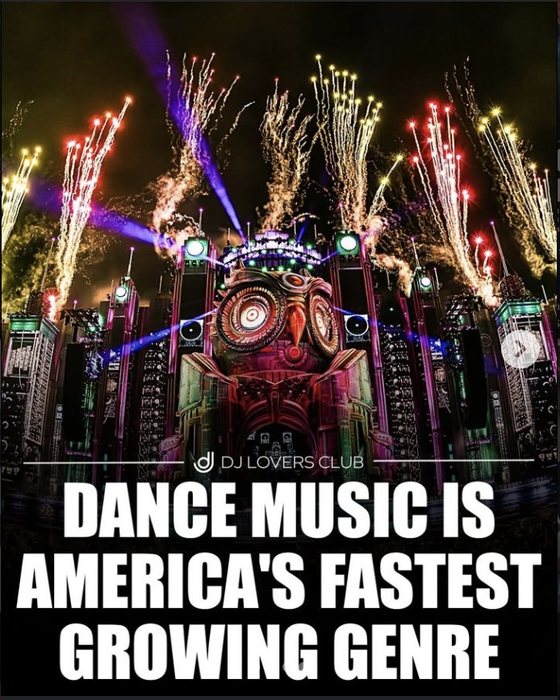
Bobby: Can I give you a quick statistic? This year on Spotify, house music was the fastest growing genre among listeners since the original EDM boom back in 2013, '14. So house music is now
Oliver: It definitely seems like there's a big house
Bobby: huge uptrend
Oliver: going on right now.
Bobby: You know, I think a part of that, bro, is the culture of going to the island of Ibiza has almost become mainstream now. I feel like it was a little bit of a kept secret, people knew about the island and stuff, and then I think Ibiza really became a mainstream place for a bunch of people, celebrities, all this stuff, and I think that's been a part of that rise as well.
Oliver: Ibiza only plays a really small role in that globally. I mean, of course Ibiza is kind of a mecca for that stuff, but if you really look at global trends, there are a bunch of different waves that have led up to this. If you see how big acts like Rumors du Sol have gotten over the last few years, or John Summit, and how they are bridging house music with more pop melodic music. Then of course the Afterlife stuff that went super viral, and for me that's almost like progressive house, the melodic techno scene nowadays.
At the same time you have this massive Afro house wave that has already been building for quite a while, like when you have Black Coffee ten years ago, or Solomun in the world, which is not necessarily Afro house, but you have these foundations of those genres that have been around for a long time, and now it just all comes together. You see it in the Netherlands, and in many other countries too, that many people who used to go to hip hop parties, or R&B, whatever, they're now in love with this whole Afro house wave.
Bobby: They love it.
Oliver: Yeah, and then tech house has become massive, and many people who used to love EDM have gotten more fond of the deeper styles, more clubby.
Bobby: Yeah, it's pretty crazy to see.
Oliver: And then now you have TikTok, where on social media, if something is hot or goes viral, everyone gets to hear it.
Bobby: Yeah, I mean, what you just said about the Afro house thing, it was a compiling of ten years of culture and DJs, but then the TikTok and Instagram boom was when that music started really blowing up online, and everyone started knowing about Afro house and listening to it. So it really does play a big role in that, which is crazy to think about, how the way music is marketed now is so different compared to ten, twelve years ago. It's crazy.
Oliver: Yeah, I experienced that myself. When I blew up in 2014, '15, you didn't really have Instagram in the way we have it now, or TikTok. But still, my music just went viral and exploded globally, even though my first YouTube sets looked terrible. They didn't have high end production, but if people resonate with it, and if it's new and fresh, it can spread so quickly. You also saw it a couple years ago with Fred again and the boy. So I think all those things have brought dance music to another level, when it comes to popularity, but also just the versatility that's out there right now.
Bobby: It's really crazy. It's crazy how many subgenres there are too that are now big. It's all compiled into dance music, which is dope for our culture as a whole.
Oliver: For me, DJing has become a lot more fun, because I can get away now with playing more niche genres in my sets, and people get it more than ten years ago.
Bobby: Yeah, that's a really cool point, dude. So I want to ask you something, you can tell me if it's true or not. Is it true that Gecko was an instrumental before, and then you put Becky Hill's vocals on it afterward? How did that come about, you bringing Becky Hill on the track?
The Story Behind Gecko
Oliver: I'm just thinking about how long I want to make the story.
Bobby: As long as you want, brother.
Oliver: So the instrumental of Gecko, I actually made in the back of my mom's car when we were driving to a holiday in France, in the summer of 2013. I was super inspired by this whole UK garage, deep house wave that was going on, with artists like Disclosure, MK, Gorgon City, Shadow Child, Dusky. I found a bit of a middle way between the UK house stuff and the more electro or EDM stuff.
Tiësto was already a fan of mine and was supporting some of my tracks, so I sent him Gecko on Twitter, a DM, because he was following me on Twitter, and then 15 minutes later he replied. At the time I was signed to Spinnin' Records, and they had a Deep House label, Spinnin' Deep, but they didn't really know what to do with Gecko, because it didn't feel deep or underground enough for Spinnin' Deep at that time. This was before Spinnin' Deep had branched out more.
So Tiësto had started playing a lot of deep house and melodic techno from back then, in a new radio show format called Club Life, and he was planning to start a new label with that brand, back in 2013. My brother and I used to listen to Club Life, his podcast, and my brother was also a massive fan of Gecko right after I made it. I remember him bursting into my room like, "Hey Oliver, do you know that Tiësto is also playing deep house nowadays? You should really send him that song Gecko. Maybe if he plays it, then Spinnin' Records will be convinced to put it out."
So I DM'd him the track, and 15 minutes later he replied, "Yo dude, this is amazing, please add me on Skype." So a couple minutes later we were messaging on Skype, and he said he would love to sign the record, and actually a week or two later he was there, in Amsterdam. So he invited me to come meet him in Amsterdam. I had to skip school.
Bobby: How old were you?
Oliver: Eighteen. So we met in Amsterdam, and I showed him some more music, and he was already like, "I promise you, next year you're going to debut in the top 100 DJs." And I was like, this guy's crazy, that's not going to happen. It wasn't really my ambition to be a superstar DJ.
But then he put out Gecko, and it just blew up. I remember, two or three weeks after we sent out the initial promo of the instrumental, we got this whole list of DJ feedback from all the greats, Axwell, Swedish House Mafia, many of the big American DJs like Zedd, Porter Robinson, Diplo, they were all giving feedback. All of them were like, wow, this is amazing. From there, many media started playing it, and organically this instrumental track became a big club hit. In the UK, Pete Tong, who has a big influence with his BBC Radio 1 show, really started to champion the record, and the moment he started to play it, Shazam was going crazy for it, people wanting to know what it was.
So then Ministry of Sound's label offered to license the track and look for a vocalist on it, and they have a great network in the UK with a lot of great vocalists. We actually got so many vocal versions, because everyone was trying to write vocals on Gecko and pitch it to us. But when we got Becky Hill's version, we were really blown away. I remember listening to it for the first time, I was like, who is this big powerful voice? It turned out to be this 19 year old girl from the UK, and she sounded fantastic. The melody worked so well over it.
It was pretty crazy that Becky and myself, and Ed, who co-wrote the vocals, we were all just 19, and that song blew up, especially in the UK. The instrumental version already kickstarted my career and I started to play everywhere, but with the vocal version on top, it put even more oil into the fire. I'm really happy with how much impact that song had, and how many doors it opened, not just for myself, but for house music in general.
Bobby: Bro, it's a staple in dance music. That track is legitimately a staple.
Oliver: So it holds a very special place in my heart.
Bobby: Crazy. By the way, can you show me the Becky Hill track off camera?
Oliver: Yeah, it should be somewhere online. If you just look for Becky Hill or Elyar Fox, Gecko, I'm not sure if it was called Love Drunk or Drunken Love.
Bobby: I'm going to have to look it up. I had no idea.
Oliver: The Chainsmokers, I think they even played that version in their radio show or something.
Bobby: That's crazy. It's kind of crazy how that story went, bro. That story's nuts.
Oliver: I was only 19 years old, and my goal wasn't even to be a superstar DJ. I just wanted to make music that I really loved, and to be able to live for my music. Of course I wanted to become a touring DJ and play shows, but I didn't see myself being this top 20 DJ. So that was pretty wild, how it all happened so quickly.
Bobby: That's crazy, dude. So we'd say Gecko was your breakout song globally, right? And what was the follow up song that took it to the next level?
From Gecko to Future House
Oliver: Right away, I think maybe one of the most important followups for me was that I started this Heldeep mixtape series. I put a lot of attention and effort into presenting people with those new sounds, this UK house, garage sound, and also future house, which I actually came up with the name for. This mixtape series blew up right away, and that really helped. Through that mix series I could premiere lots of my new songs.
One of my first sets on YouTube was just at Spinnin' Records' office, which looked terrible, and I was dancing a bit silly, shuffling, just a goofy 19 year old boy messing around, but it still blew up on YouTube. From there I started to release tracks I was working on, like a remix for Martin Garrix's Poison, which came pretty quickly after Gecko. Also one of my first HI-LO tracks, before I had the name HI-LO, was meant to come out after Gecko, but it was too dark and twisted a sound to release right after, so I stalled that track for later.
From that point I had a hot streak of releases, like a remix that blew up. And then I also had a song that Madonna and Diplo were interested in for Madonna's album, but I said no, I'm keeping it for myself.
Bobby: No way.
Oliver: I'm glad I did. That's Koala. And that was, I guess, the official follow up for Gecko, and that blew up too. Something a little more in the HI-LO lane was a collaboration I did with Sander van Doorn, who was a big inspiration for me since the start, with his clubby techno trance sound. We made a track called This Sound, and that track surprised a lot of people, because at that time they just knew me for Gecko and Koala, and then I suddenly came with this, and it got really embraced by the whole trance and techno community. This was still only 2014.
Bobby: Crazy.
Oliver: And then 2015 I came out with a lot more future house stuff, some more melodic things, like my track Melody, a collaboration with Shaun Frank and Delaney Jane, and Cash Cash, which became quite big here in the US. And another Canadian act, Seven Lions, Love Me Dead. It was also kind of a big surprise for their fans that they suddenly came out with this UK house, future house sound.
Those Heldeep mixtapes I talked about, there was just so much demand for them that radio stations all over the world started hitting me up, like, do you want to do a weekly radio show, so we can syndicate it? So already in June or July 2014, I started Heldeep Radio. The mixtape became a weekly series, and that also blew up right away. It was just all those things together, and me starting to play shows, and people reacting really well to those shows. Really crazy how that all happened, even though I was only 19.
Bobby: Happened all before the age of 20, right dude? It's crazy. So where did your love for techno come from, in starting your alias HI-LO?
Roots in Dutch Dance Culture
Oliver: Well, I guess I've been a fan of dance music as long as I can remember. One of my first memories is when I was about three years old, at preschool, where we had a little dance break. I remember dancing to 2 Unlimited, No Limit, and asking my mom what "there's no limit" meant.
Then when I was ten years old, I wanted a big radio, a boombox, for my birthday, and I started buying compilation CDs with my allowance money, kind of cheesy dance music. I also got into jumpstyle and hardstyle, harder dance music, when I was around 11. That was a massive trend in the Netherlands, this jumpstyle dancing thing. Already at that age, some kids at my school, or my neighbor who was a few years older, was making music with FL Studio, so I knew as an 11 year old that you could make your own music in a studio.
When I was 12, 13, I went to high school, and that's when I became a big fan of more club music from around that time. This is like 2007, and at that time it was interesting, you had minimal techno merging with electro house and tech house, and also fidget house from the UK. It was a very eclectic sound, and luckily I was absorbing all these different types of music, this is all before the big EDM boom. Then by the time the whole EDM boom came, with Afrojack and Hardwell and David Guetta and Swedish House Mafia, I was embracing that too. And then dubstep also blew up, and around that time I got into drum and bass. This is all still in my teenage years, so I just got very fortunate to be loving all those genres super young.
Including techno, when I actually started to make techno, that was right after Gecko. So Gecko blew up, and I wanted to put out some more techno influenced tracks. Right after Gecko, I made this track that was kind of weird, acid techno inspired, but also bass house before there was bass house, this distorted banging track called Wolflur. But Gecko was still blowing up, so we didn't want to put out a release right after. We sent that track out to a bunch of DJs to see if they would play it, and a bunch of them did.
One of my inspirations for that style of music, Sander van Doorn, was really championing that record, playing it in all his sets, even at the Ultra main stage. But even he confessed to me and the label people, I love this track so much, but even for my sets it's already a bit too dark. That's when I realized we probably shouldn't go with this right after Gecko, it just didn't make sense. But I was already working on that stuff, it just wasn't the right time yet. Then a year later, bass house started popping off, and I was making some bass house stuff too. So I figured I'd start an alias, and go with the more bass house stuff first, and eventually I could put out more of the techno influenced music.
For this HI-LO alias, I was very inspired by the way Eric Prydz did it, because he already had Pryda, Cirez D, he has like eight artist projects. As far as I can remember, he already had that from the get go, which I thought was interesting, because usually you see DJs become big and then they come out with a side alias, which I guess happened to me too. I really wanted to start HI-LO back then. Even though I remember when I showed Skrillex and Tiësto the HI-LO stuff for the first time, they were like, dude, this is sick, you should just put this out under your own name.
Bobby: You went against Tiësto and Skrillex's advice.
Oliver: Yeah, but they weren't wrong. There's no wrong or right, it depends how you want to do it. I already knew that over the years the two sounds would deviate more and more, so it would give HI-LO room to really become its own artist project. And now I'm super happy that I can do both.
Bobby: That's awesome, dude. So you mentioned that you were exposed to techno style dance music when you were three years old in the Netherlands. Is dance music so heavily involved in the culture there that it's like the main genre?
Oliver: Well, the thing is, techno music came from the US, but back in the '80s and '90s, or even the early 2000s, it was very underground in the US. I know from American DJs, I think Seth Troxler was speaking about this in an interview once, that back in the day, if you told people here that you liked house music or dance music, they would ask if you were gay or a junkie. It was just so underground. But when it came to the UK and the Netherlands, and Germany, Belgium, France, when it came to Europe in the late '80s and early '90s, it got embraced and blew up, and a lot of illegal raves started happening, especially in the UK and the Netherlands.
The big difference between the UK and the Netherlands was that the UK had a much more conservative government at the time, and they were really trying to close those raves down, and try to ban it, which isn't possible, people were so in love with it. But in the Netherlands, the authorities knew they couldn't stop it, so it was better to let it happen, to make it legal, and give certain people licenses so they could organize events in big spaces safely. That's how you get organizations like ID&T, and events like Sensation.
Bobby: What time period is this?
Oliver: This was already in the early to mid '90s.
Bobby: So the Netherlands was one of the first places to allow event promoters to throw raves legally in Europe, is that what you're saying?
Oliver: Yeah, I think that played a big role, that it exploded. I think that's how events like Awakenings and Sensation happened, the guys who started that were doing illegal raves before, and then luckily they could make it official, and organize events more safely with certain guidelines. So I think that played a really big role. The thing that exploded from it was gabber, hardcore techno.
Bobby: Gabber.
Oliver: Gabber, this hard dance, hardcore music.
Bobby: I've never heard of that.
Oliver: This became like a cult thing in the Netherlands. It actually originated in my hometown, Rotterdam. It was techno music that got out of control, faster and faster and more distorted, and this whole generation of kids went crazy for it. Then you also got a more commercial version of it called happy hardcore, and in the UK, Coxy used to be a hardcore DJ, more like UK hardcore. I think Tiësto also started as a hardcore DJ, under a different name, I think it was called The Joker or something.
Bobby: Tiësto started as a hardcore DJ?
Oliver: He was probably already DJing even before hardcore was a thing, but I know he was a hardcore DJ before he became big as a trance DJ. This hardcore rave trend played a massive role in making dance music explode in the Netherlands, and from there many people started to fall in love with trance music, before it was even called trance music. Then you had a whole generation of kids, Armin van Buuren, Ferry Corsten, all making trance music. At the same time you also had this whole electroclash thing, and a lot of French acts, Daft Punk, in the late '90s they were already crushing it, disco and French house. One of my favorite tracks ever is Music Sounds Better With You.
I think that gabber trend, and the fact that in the Netherlands we were already doing those massive scale events officially and legally very early on, set the foundation for the Netherlands to become this hub in dance music, a small country creating so many huge artists.
Bobby: Literally, so many, bro, in all different genres.
Oliver: Also in drum and bass, we have people like Noisia, or right now in the house scene or tech house, we have Chris Stussy.
Bobby: Frankie Vega right now.
Oliver: So many different genres. I'm thinking about Tinlicker too, the more melodic side. There's so much.
Bobby: I'm a big fan. Dude, you just taught me so much in the last 30 minutes.
Oliver: There's so much to talk about when it comes to dance music in general. You should definitely check out the gabber thing, you're going to be mind blown.
Bobby: I'm going to check it out 100%, bro. That's so interesting. Would you consider dance music mainstream globally now?
Oliver: Yeah, but I think you can already consider that since the EDM boom. If you listen to 2010 pop music, there was already so much dance influence, the Black Eyed Peas, David Guetta, stuff like that.
Bobby: Yeah.
Oliver: But I mean, it always comes in waves. I think now what you really see is more like actual clubbing music becoming mainstream. I didn't even mention Anyma when I was talking about that.
Bobby: You didn't mention Anyma.
Oliver: He's one of my favorites, really on top of the game.
Bobby: I love Anyma, man, his music's sick.
Oliver: How his music has exploded, even though it doesn't have a pop structure at all, it's actual real club music, and people are ready for it now. That's amazing to see. I always kind of saw it going that way, but I didn't know it would be this big.
Bobby: It's crazy, it's even taken over. Hip hop used to be the main genre here in the US, and it's still big, but dance music is so big now. I went to EDC two or three years ago, and I remember a music tech saying you can always tell the trajectory of where a genre is going based on what the kids are listening to, and all the kids in college are listening to dance music and house music. All of them, bro. So the future's bright for us and dance music.
Current Favorites and Set Staples
Bobby: All right, dude, I'm going to ask you a hard hitting question now. I hope you've had time to think about this. Are you ready? Who are your top five artists you're listening to right now?
Oliver: What I'm listening to right now, well, Rumors du Sol is kind of a go to artist to listen to, it's very chill. I've been loving their whole catalog since they came out, 2013, 2014. Of course, Kaskade, he's had a really big year, killing it.
Bobby: That album he released was dope too.
Oliver: And Dom Dolla, of course, in that lane as well. There's so much. Chris Lake, he had a great year with his album. Sammy Virji, crushing it.
Bobby: Keep going, dude, give us more. I want more than five out of you, brother.
Oliver: In the techno space, there's a new act called Elusive.
Bobby: Elusive.
Oliver: E-L-U-S-I-V-E. I think they have a really interesting take on driving techno music, I like their style. Also, Marlon Hoffstadt.
Bobby: Oh dude, I love Marlon Hoffstadt, bro. Me and Bill listen to his sets in our living room all the time.
Oliver: Europe has really exploded for him too.
Bobby: We're hoping he really blows up here.
Oliver: We also have this girl, Kiki, who's really crushing it in that lane too. And Disco Lines, of course, he's killing it. I don't even love that one song that much, but it's so goddamn catchy.
Bobby: But no, I want to say I like his other stuff more, and this is all blowing up. I also love drum and bass, there's so many great artists there as well.
Bobby: Who are your favorite drum and bass artists?
Oliver: I've always loved Netsky and Noisia, Pendulum, NCT, Sub Focus, Chase and Status of course. I've got to give a big shout out to Matrix and Futurebound for their drum and bass remix of Gecko, which I still play sometimes. Because drum and bass kind of came back, this remix is having a bit of a comeback again too, which is interesting. There's also a guy, 1991, I like him a lot, I play his remix a lot, he has many other great remixes of his own. He collaborates a lot with Sub Focus, they have an act together called Warship, I think they play a lot in the US with that act. There's so much.
Bobby: I love hearing who you're listening to right now.
Oliver: And there's a lot of exciting things happening with this UK deep house sound, artists like Prospa.
Bobby: Dude, Prospa's killing it right now, and Josh Baker's killing it.
Oliver: There's a new act, very new, and they did one of my favorite tracks this year, a rework of a trance track. There's so many exciting things happening, I'm glad to play a small role in all of that.
Bobby: Play a bigger role than that, man, don't ever pigeonhole yourself like that, I'll get pissed if you do that again, dude. All right, what are the top five songs you're playing in your set right now?
Oliver: One of the biggest moments in my set is this Empire of the Sun, We Are the People remix from Artbat, it's a really epic remix that I play in the middle of my set usually.
Bobby: I love Artbat.
Oliver: And in the same section of the set I usually play my HI-LO track Re with the vocal from Silence, the deadmau5 track, in a mashup. deadmau5 played it yesterday.
Bobby: He played it in his set, right?
Oliver: Yeah, I played Re yesterday with the Silence vocal. So those two I'd say. My Music Sounds Better With You remix is a really good one, but I don't know if that makes the top five. I play a Crazy Frog remix a lot, and it just goes off everywhere.
Bobby: I feel like I have to include it in the top five.
Oliver: [...] yeah. This remix of Kids from MGMT, it's like 150 BPM, kind of like a Marlon Hoffstadt type remix but even more banging. It might actually just be all remixes, because those get the biggest reaction.
Bobby: That's what's up.
Oliver: So I guess we should include my Music Sounds Better With You remix as well. And there's this remix of Miracle Maker from Dom Dolla, a bootleg remix, I keep playing it in different types of mashups, and it always goes off. I also want to say an original record.
Bobby: Go ahead, dude, seven, eight, nine, let's just do it, let's go for it, more music.
Oliver: It can't be all remixes and bootlegs. I did mention one original, for Re, but that's in a mashup. Crazy Frog, number one, actually.
Bobby: All right, we got an original track in there, right?
Oliver: Crazy Frog, to be specific, The APR'd.
Bobby: Yeah, I know that one, that one's good.
Lady or Whatever You Say
Bobby: All right, Oliver, so what we're going to do here is I'm going to give you two of your songs and you have to pick one, battle of this or that. All right, Lady or Deja Vu?
Oliver: Ooh, okay. I love Animals England, and I really like what we did, but yeah, I got to go for Lady, one of my favorite songs ever.
Bobby: It's fire, it's fire. Lady or Details?
Oliver: Ooh, yeah, I'll still go with Lady.
Bobby: All right, Lady or Masada?
Oliver: Yeah, I'll still go with Lady.
Bobby: Lady or Aquarius?
Oliver: Aquarius is also kind of a rework, or an interpolation of a house classic from Kerri Chandler. I still sometimes play that one, it's great, it's also one of my dad's favorite house tracks, so I'll go with Aquarius.
Bobby: All right, let's go, let's go. We are birthday bros.
Oliver: Yeah, we're birthday bros, dude.
Bobby: We're both Aquariuses, February 1st, dude, we're a month out from that.
Oliver: We might have to celebrate together, bro.
Bobby: Yo, Aquarius or Set Me Free?
Oliver: I love both, Aquarius.
Bobby: All right, Aquarius or Koala?
Oliver: Yeah, I got to go with Koala.
Bobby: Koala or The Right Song?
Oliver: Okay, yeah, let's go for The Right Song.
Bobby: No one said this was going to be easy. The Right Song or Turn Me On?
Oliver: Turn Me On.
Bobby: All right, Turn Me On or Gecko?
Oliver: Gecko.
Bobby: Big. Dude, I knew I had to keep that at the end, bro, I knew it. Oliver, thank you, bro, you're the man, dude, appreciate you.
Oliver: Peace.