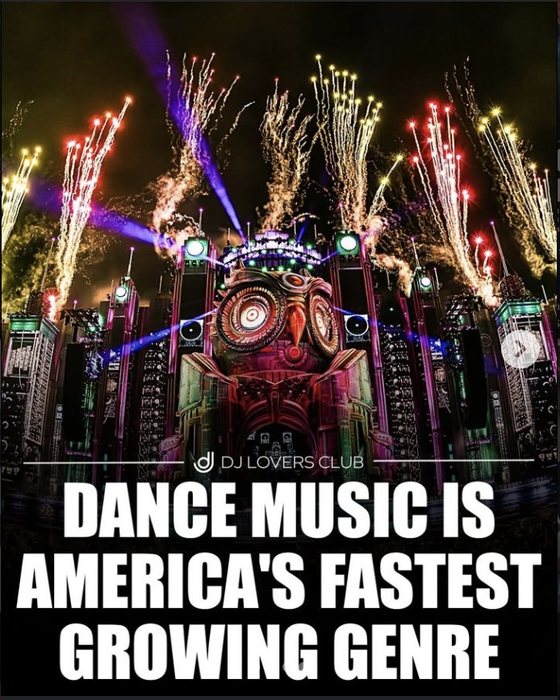
From the DJLC channel
How Insomniac's World Party Parade Shut Down the Las Vegas Strip
For EDC's 30th anniversary, Insomniac shut down the Las Vegas Strip with a World Party Parade of custom floats, live DJs, and performers before the festival even started. This traces EDC from an illegal rave in 1997 through its move to Las Vegas in 2011, and the comparisons now being drawn to Berlin's Love Parade.
Transcript
Imagine flying into Las Vegas expecting your typical EDC weekend. You've got your pool party tickets ready, your club events lined up, and you're prepared for the usual casino chaos. But when you step outside your hotel on Thursday afternoon, you realize something is completely different. The entire Las Vegas Strip has been totally shut down. Massive custom-built rave floats are rolling right down the middle of the asphalt. Moving stages are blasting heavy house and techno music into the desert air. Thousands of ravers are flooding the sidewalks, and the vibe is completely immaculate.
But here's the craziest part: this wasn't even EDC itself. The actual festival hadn't even started yet. To celebrate the historic 30th anniversary of the Electric Daisy Carnival, Insomniac didn't just throw a pre-party. They launched the first-ever World Party Parade. Today we're looking at how a subculture that was once hunted by law enforcement managed to pull off the ultimate city takeover, and why this single parade just changed American dance music history forever.
To truly understand how monumental this moment is, we have to travel back to 1997, when EDC first started as a small, passion-driven rave in Southern California. Electronic music was far from mainstream. In fact, the rest of the world largely rejected it. The scene faced endless media backlash, aggressive law enforcement crackdowns, and a constant struggle just to secure safe, legal venues. Ravers were treated like outlaws. But Insomniac's founder, Pasquale Rotella, refused to back down, constantly betting his entire future on the power of dance music culture. Year after year, the festival grew from a niche gathering into a massive movement.
But by 2010, the pressure reached a breaking point. Following intense controversy and massive safety concerns at the Los Angeles Memorial Coliseum, the media declared that the rave scene was officially dead. The critics thought EDC was completely finished. They had no idea it was about to find its ultimate home.
In 2011, Insomniac made a bet that changed the entertainment industry forever. They packed up the entire festival and moved it to the Las Vegas Motor Speedway. On paper, it was a massive gamble. But in reality, the Las Vegas location was the perfect home. The city already possessed a legendary 24-hour nightlife culture, massive hotel infrastructure, and a global tourism pipeline that could handle hundreds of thousands of people.
Over the next decade, EDC evolved into something much larger than a music festival. It became a full economic takeover. The entire week leading up to the event transformed into EDC Week: dominating every pool party, selling out club takeovers, forming direct hotel partnerships, and completely branding the international airport. For seven days, the entertainment capital of the world completely surrenders its identity to rave culture.
But nothing prepared the city for what happened on Thursday, May 14th. To mark three decades of electronic dance music history, Insomniac unleashed the World Party Parade down the middle of Las Vegas Boulevard. The Strip was locked down as fifteen massive, custom-engineered floats, iconic festival art cars, and hundreds of theatrical performers, dancers, and acrobats took over the pavement. DJs like Eli Brown, James Hype, MEDUZA, and many more were literally standing on moving stages, blasting heavy beats and conducting a sea of thousands of ecstatic fans dancing on the sidewalks. Ravers from all over the world were trading candy bracelets with tourists, and social media completely exploded with clips from the chaos.
It wasn't just a parade. It felt like Camp EDC had broken out of the Speedway and successfully invaded the heart of the city.
The moment the floats started rolling, the electronic community instantly began drawing comparisons to one of the most legendary movements in music history: Berlin's iconic Love Parade. Originally started in Germany back in 1989, the Love Parade grew into a massive political and cultural street takeover that drew millions of people together in the name of peace, love, and techno. For years, dance music historians wondered if America would ever have its own version of that pure street-level energy. Now, looking at the sheer scale of what Insomniac just pulled off in Nevada, people are asking if the World Party Parade is officially the birth of an American Love Parade.
What started decades ago in a dark, illegal, hidden underground warehouse has officially scaled up to a point where it can shut down one of the most heavily policed, famous boulevards on Earth. So what happens next? Does this parade become an annual Thursday tradition that grows bigger and bolder every year? Do other massive music festivals around the globe try to copy this exact city takeover blueprint? One thing is certain: rave culture has won the culture war. It is no longer a subculture hidden in the shadows. It is the main event.